When was the last time getting dressed felt simple?
By Liz Sunshine
Warning: This is not fashion advice. It’s a quiet idea that could change how you live in your clothes.
Not exciting. Not impressive. Not productive.
Just… easy.
No second-guessing. No outfit changes. No quiet negotiation with the mirror before leaving the house.
If you love fashion, getting dressed can quietly become one of the most emotionally charged moments of the day. We stand in front of wardrobes full of clothes and feel, somehow, that we have nothing to wear. A bad outfit can follow us into meetings, conversations, photographs, even memories. A good one can feel like permission to belong, to be confident, to be seen differently.
But we rarely ask why.
We assume clothes are supposed to matter this much.
But what if the discomfort so many of us feel around clothing isn’t a personal failure - or even a fashion problem - but a relationship problem?
We talk about relationships with people, work, food, money, and technology. We understand that these relationships shape our well-being.
But almost no one talks about our relationship with clothes.
And yet, clothes sit closer to us than almost anything else. They touch our skin every day. They carry memory, identity, aspiration, insecurity, culture, and change. They witness who we are becoming.
Somewhere along the way, clothing stopped being something we used and became something we measured ourselves against.
Without noticing, many of us learned that:
newness equals value
trends equal relevance
more options equal freedom
dissatisfaction is normal
No one learned these lessons intentionally; we absorbed them slowly through advertising, algorithms, shop windows, and comparison.
And in turn, when getting dressed feels heavy, we assume the problem is us.
We feel unsure → we buy something new.
We feel temporarily better → then uncertain again.
The solution appears to be another purchase.
From the outside, it looks like consumption.
From the inside, it often feels like hope.
Hope that this piece will finally make things easier.
Hope that we will recognise ourselves again.
Hope that confidence can be purchased rather than cultivated.
But the relief rarely lasts - not because we chose the wrong item, but because we’re asking clothes to solve problems they were never meant to solve.
Clothes can signal belonging, but they cannot create it on their own.
They cannot resolve identity.
They cannot quiet comparison.
They can only express moments of confidence, inclusion and happiness, before their power fades and needs to be replaced.
There was a time when getting dressed felt heavy for me, too. My thoughts around clothing were filled with pressure, expectation, guilt, and shame. Clothes felt tied to who I was allowed to be, and when an outfit felt wrong, the entire day felt slightly off balance.
I didn’t realise I had a relationship with clothes. I only thought I had a wardrobe problem.
So I tried the solutions most of us try: better choices, more intentional purchases, different styles, fewer mistakes.
Nothing changed.
The shift happened when I stopped asking, What should I wear? and started asking, Why does this matter so much to me, and what is really missing here?
That question changed everything.
Not overnight, and not dramatically - but quietly, steadily. I stopped shopping for twelve months without effort. Not through restriction, but through understanding. Clothes became less about fixing myself and more about utility, creativity, comfort, and curiosity.
For the first time in years, getting dressed felt neutral, and I began to find unexpected joy in some of my oldest clothes.
The external world hadn’t changed. My relationship had.
Modern fashion offers extraordinary creativity and possibility. But it also quietly depends on a feeling that we are never quite finished.
If we felt fully content with what we owned, the system would slow down.
So dissatisfaction becomes normalised, even expected. We are encouraged to continually reinvent ourselves, but rarely supported in understanding who we already are.
The problem is not fashion itself. Fashion is the aesthetic reflection of culture, art, identity, and play.
The problem is disconnection.
When I lost connection with my preferences, values, and rhythms, clothing became confusing. I outsourced decisions to trends, influencers, or algorithms, and slowly lost trust in my own taste.
I stopped asking, “Do I like this?”
and started asking: “Is this right?”
But what if change didn’t begin with buying less, decluttering more, or following stricter rules?
What if it began with attention?
Noticing how clothes make us feel.
Noticing when we shop from boredom or insecurity.
Noticing what we reach for repeatedly and why.
Small awareness creates small shifts. And small shifts, multiplied across many people, reshape culture.
You don’t need a perfect wardrobe to change your relationship with clothes. You only need curiosity.
You can pause before purchasing.
You can rewear without apology.
You can choose comfort over expectation.
You can decide that enough is, whenever possible, enough.
These are quiet decisions. Almost invisible ones, but they return your power and agency to you. Perhaps the goal isn’t to love every item you own. Perhaps the goal is to feel at ease with yourself, regardless of what you wear. When that happens, clothing becomes lighter again. Less responsibility rests on each garment. Getting dressed becomes an act of participation in life rather than preparation for judgment.
You don’t have a clothing problem.
You have been living inside a relationship you were never taught to see.
And once you see it, you cannot unsee it.
So the real question is not what you should wear.
It is this:
Do you have a good relationship with clothes?
-
![]()
Material index
-
![]()
About
-
![]()
Q&A
-
![]()
Soft Activism & Change
-
![]()
Further Reading, Listening & Learning

Creating change, one question at a time.
Participate
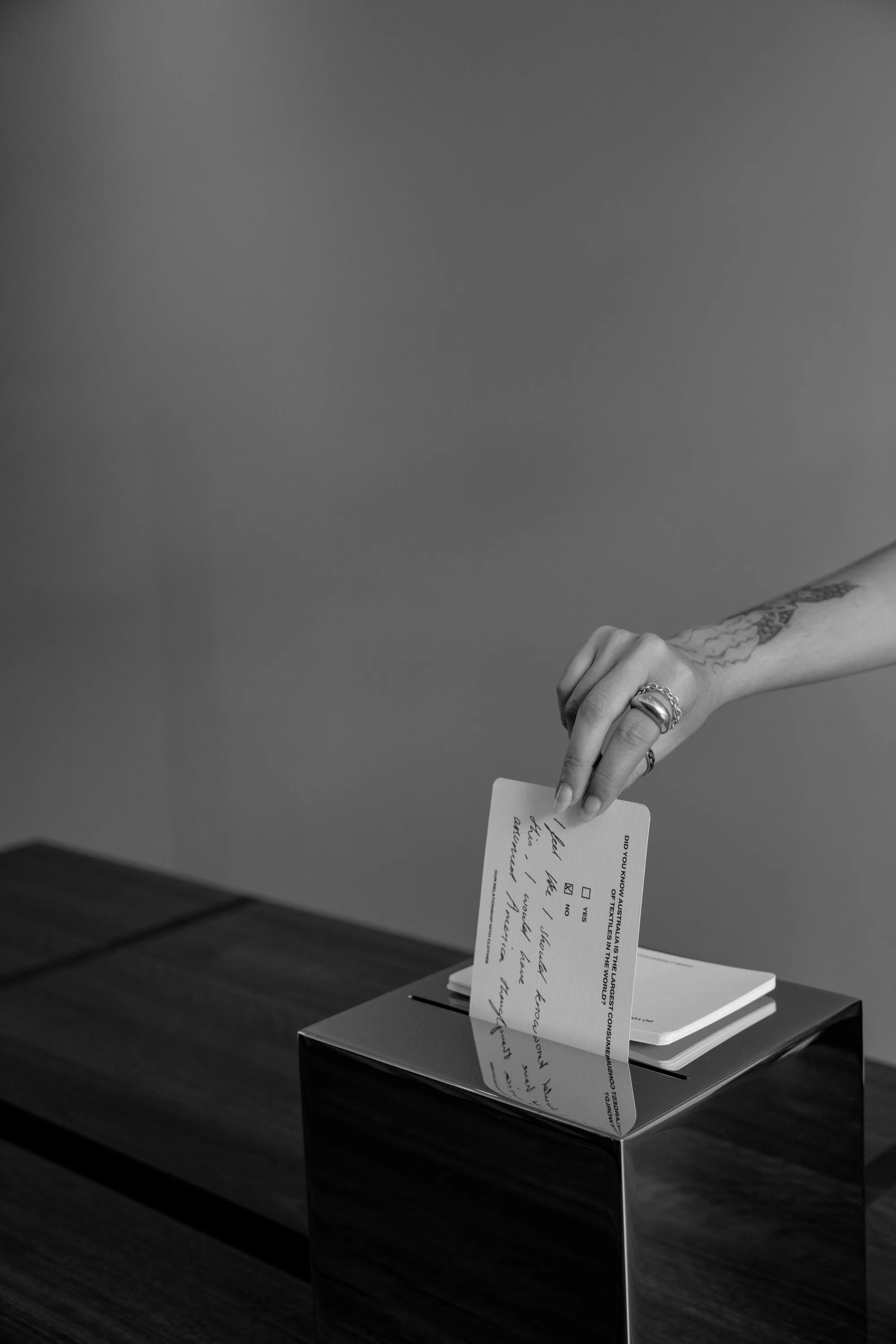
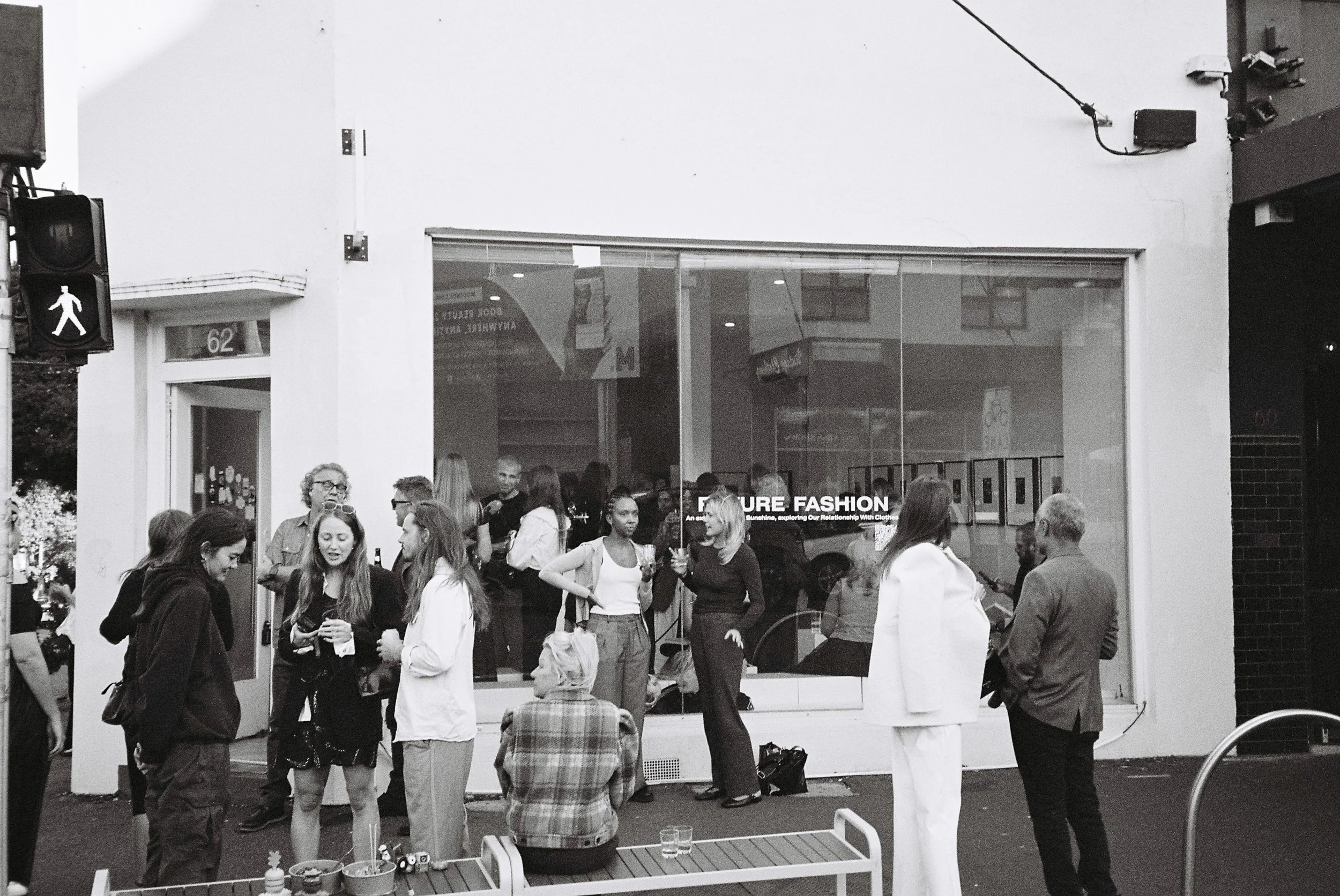
The Our Relationship With Clothes (O.R.W.C.) project is a space for everyone. Whether you’re already on the path to understand your relationship with fashion, wanting to repair it or just beginning to explore how clothes make you feel. This community is here to meet you where you are, normalising asking questions, having conversations and listening from a place of love and respect.
We believe in progress, not perfection.